16 DEC 2025
The mosque later underwent restoration in 1260 by El-Mujahid Ishaq, one of the Seljuk Atabegs and the qadi of Cizre. During this restoration, several sections were added to the structure.
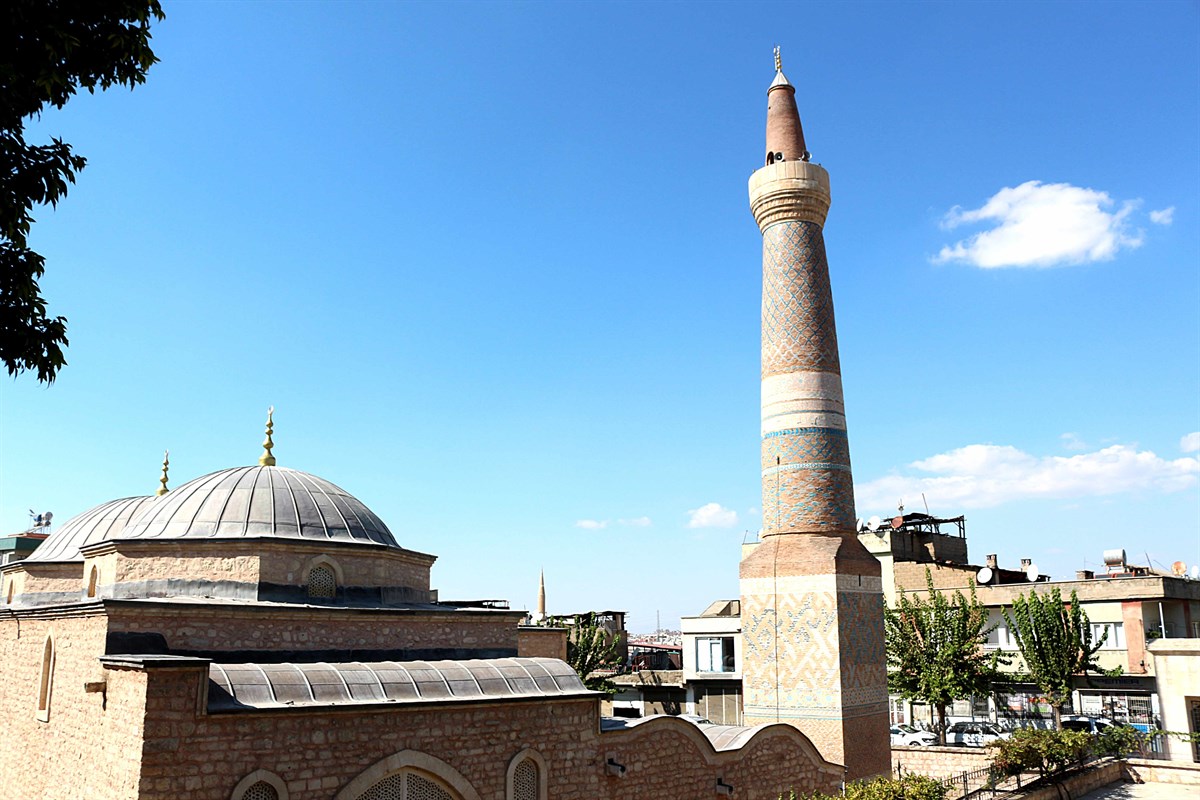
The mosque’s minaret rises on a square base with a cylindrical shaft. Information regarding the construction date of the minaret is recorded in an inscription located inside the building. The minaret is constructed of brick, and its decoration features molded ornaments made of gypsum stone known as cas, as well as glazed brick decorations forming various geometric patterns. The minaret was built using a technique widely employed in Iran and Turkestan. It tapers upward from a square base into a cylindrical body.
In terms of construction technique, the minaret closely resembles that of the Great Mosque of Mosul. These similarities include the transition from a square cubic base to a cylindrical shaft and the decoration of surfaces with glazed bricks and tiles.
Due to additions made during different periods, the building does not display architectural uniformity. The exterior walls clearly reflect structural additions from various eras. On the eastern façade of the mosque, there were formerly several adjoining spaces, believed to be madrasah rooms added during the Ottoman period.
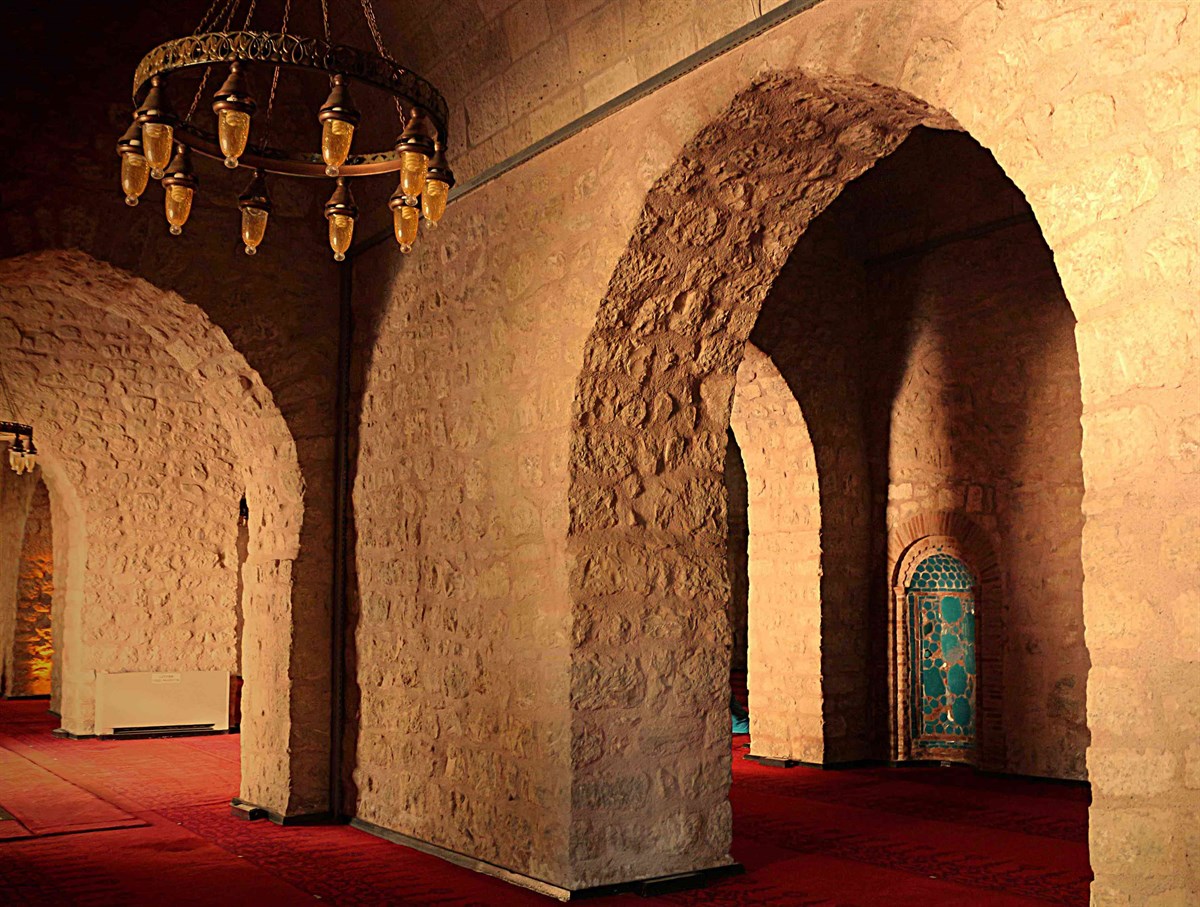
The prayer hall (harim) is accessed through a doorway located at the center of the northern façade. The northern and southern sections of the prayer hall differ in structure. The northern section consists of a barrel-vaulted area following the entrance, with side sections divided into two aisles by a central row of arched supports; these aisles are also covered with barrel vaults.
In the southern section of the building, there are three adjacent domed spaces. The central dome is larger and higher than the others. These domed spaces are connected by arched passages, and each contains a mihrab on the qibla wall. The central domed space differs from the others in terms of wall construction technique. Research suggests that this central domed section constitutes the earliest phase of the mosque, with the remaining parts added in later periods.